Have you ever wished your doors could close quietly and securely on their own? Installing an automatic door closure can save you time, boost safety, and add convenience to your daily routine.
Whether it’s for your home or office, learning how to install one yourself isn’t as hard as you might think. You’ll discover simple, step-by-step instructions that anyone can follow. Keep reading to find out how you can make your doors work smarter for you—without calling a professional or spending a fortune.
Choosing The Right Door Closer
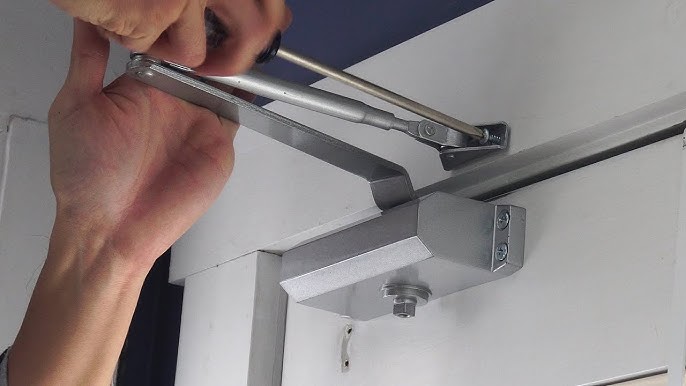
Choosing the right automatic door closer is important for smooth door operation and safety. The correct closer helps the door close gently and securely every time. It fits your door size and type. This section explains how to pick the best door closer for your needs. Follow these tips to make the right choice.
Types Of Automatic Door Closers
There are several types of automatic door closers. Surface-mounted closers attach to the door or frame. They are easy to install and common in homes. Concealed closers hide inside the door or frame. They offer a clean look but need more work to fit. Floor spring closers sit in the floor. They are strong and good for heavy doors. Hydraulic closers control the speed with fluid. Pneumatic closers use air pressure. Each type suits different doors and uses.
Factors To Consider
Think about door weight and size. Heavier doors need stronger closers. Check the door material, like wood or metal. Some closers work better on certain materials. Consider how often the door opens. High-traffic areas need durable models. Look at closing speed and force. Adjustable closers let you set these. Weather resistance is key for outdoor doors. Choose a closer that fits your climate.
Measuring Your Door
Measure the door’s height and width first. Note the door thickness. This helps find a matching closer size. Check the gap between the door and frame. It affects installation type. Measure the weight if possible. Use a scale or ask a professional. Accurate measurements prevent buying the wrong closer. Keep these numbers handy when shopping.
Gathering Necessary Tools
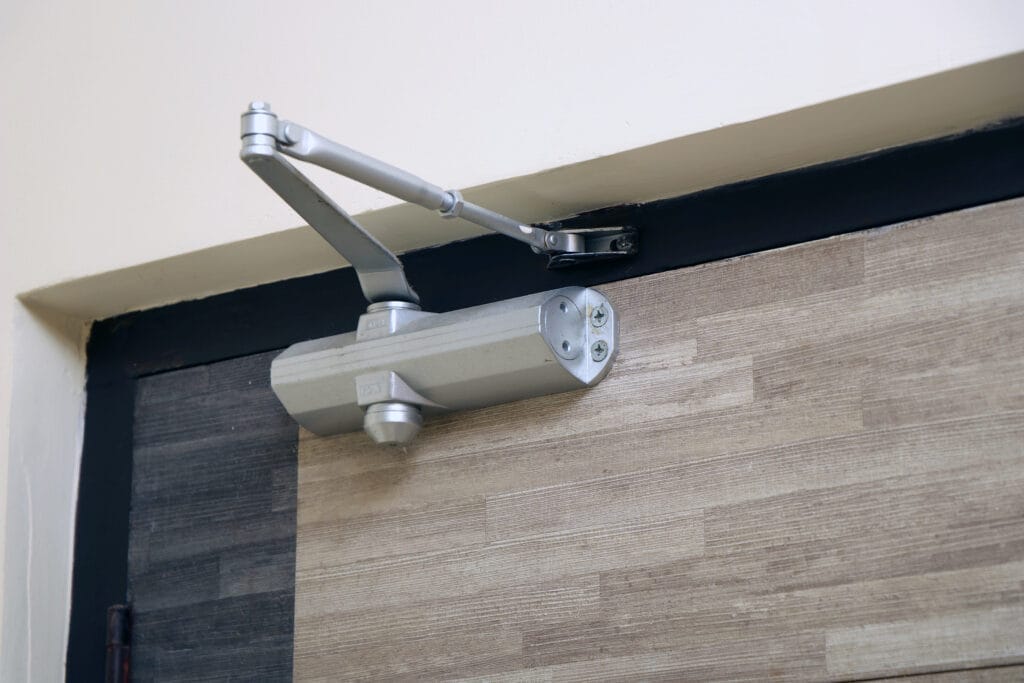
Before starting the installation of an automatic door closer, gather all necessary tools. Having the right tools ready makes the job easier and faster. It also helps prevent mistakes and damage to the door or the closer.
Basic Tools List
Prepare a screwdriver, both flathead and Phillips types. A power drill will help create holes quickly and accurately. Keep a tape measure handy to mark exact positions for the closer. A pencil or marker is useful for marking spots. An adjustable wrench or a set of pliers will help tighten bolts and nuts. Finally, a level ensures the closer is straight and works smoothly.
Safety Equipment
Wear safety glasses to protect your eyes from dust and debris. Gloves protect your hands from sharp edges and tools. Use ear protection if you use loud power tools. Keep the working area clean to avoid trips or falls. Safety first makes the installation smooth and injury-free.
Preparing The Door
Preparing the door is a key step before installing an automatic door closure. A clean and clear surface helps the new hardware fit perfectly. It also makes sure the door works smoothly after installation.
Taking time to prepare the door saves effort later. It prevents problems like poor fitting or damage. Start by cleaning the door surface. Then remove any old hardware that might get in the way.
Cleaning The Surface
Use a mild detergent and water to clean the door surface. Remove dirt, grease, and dust completely. A clean surface helps the new closure stick well. Wipe the area with a dry cloth after cleaning. Avoid leaving water on the door to prevent damage.
Removing Old Hardware
Check the door for old hinges, locks, or closures. Use a screwdriver to remove screws carefully. Take off all parts that might block the new installation. Keep the door smooth and clear of any old pieces. This step ensures a proper fit for the automatic closure.
Installing The Door Closer
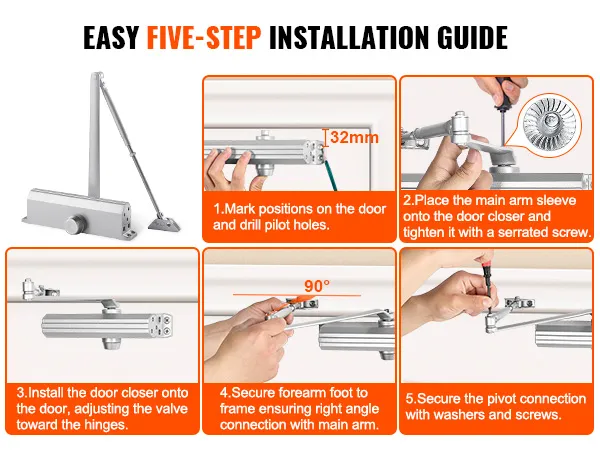
Installing the door closer is a simple task that improves your door’s function. It helps the door close smoothly without slamming. Follow these steps to install it correctly and safely.
Marking Drill Points
Start by holding the door closer in place. Use a pencil to mark where the screws will go. Check the instructions for exact spots. Make sure marks are straight and even. This step ensures the closer fits perfectly.
Mounting The Bracket
Next, drill small holes on the marked points. Use a drill bit that matches screw size. Attach the bracket with screws tightly. The bracket must be firm and stable. It supports the weight of the door closer.
Attaching The Closer Arm
Connect the closer arm to the bracket. Align it according to the guide. Secure the arm with screws or pins provided. Test the arm moves freely without sticking. This allows the door to close smoothly every time.
Adjusting The Door Closer
Adjusting the door closer is a key step after installation. It ensures the door closes smoothly and safely. Proper adjustment prevents slamming and keeps the door secure. Each setting controls a different part of the door’s movement. Careful tuning makes the door work just right for your space.
Setting Closing Speed
The closing speed controls how fast the door moves from open to almost closed. Turn the adjustment screw slowly to change the speed. A faster close may cause the door to slam. A slower speed allows a gentle close. Find a balance that feels smooth and safe.
Controlling Latching Speed
Latching speed is the final part of the door closing. It controls how quickly the door shuts completely. Adjust this to avoid noisy or incomplete latching. A proper latching speed ensures the door locks firmly. Make small turns on the screw for fine-tuning.
Adjusting Backcheck
Backcheck protects the door and wall from damage. It slows the door if pushed open too hard. Adjust the backcheck to stop the door from hitting the wall. This setting helps keep the closer in good shape. Test the door movement to find the right backcheck level.
Testing And Final Checks
After installing an automatic door closure, testing and final checks are crucial. These steps confirm the door works safely and correctly. They help spot any problems early, saving time and effort later.
Careful testing ensures the door closes smoothly and securely every time. Final checks guarantee all parts stay tight and aligned. This process improves the door’s lifespan and your safety.
Ensuring Smooth Operation
Start by opening the door fully. Let it close on its own to see if it moves smoothly. The door should not stick or move too fast. Adjust the tension on the closer if needed.
Check the door’s speed and force. It should close firmly but not slam shut. Make sure the latch catches well. Try opening the door several times to confirm consistent operation.
Troubleshooting Common Issues
If the door closes too fast, reduce the closer’s tension. If it closes too slowly, increase the tension slightly. Listen for unusual noises like squeaks or grinding.
Loose screws can cause poor performance. Tighten all mounting bolts and brackets. If the door sticks, check hinges and alignment. Realign the door or adjust hinges as needed.
Test the door in different weather conditions if possible. Cold or heat can affect performance. Make small adjustments to keep the door working well year-round.
Maintaining Your Door Closer
Maintaining your automatic door closer is important for smooth operation. Proper care helps avoid issues and extends the device’s life. Simple maintenance steps keep the door working safely and quietly.
Regular Cleaning
Dust and dirt can build up on the door closer. Wipe the surface with a soft cloth regularly. Avoid using harsh chemicals that can damage the finish. Keep the area around the closer free of debris. This prevents jams and ensures smooth movement.
Lubrication Tips
Lubricate moving parts to reduce friction and wear. Use a light machine oil or silicone spray. Apply sparingly to hinges and joints. Too much oil can attract dirt and cause problems. Wipe off any excess after applying.
When To Replace Parts
Listen for unusual noises like squeaks or grinding. Check for leaks in hydraulic closers. Replace worn or damaged seals and springs. If the door closes too fast or too slow, parts may need change. Regular checks help spot problems early.
How Home DecorUp Can Help You with How to Install Automatic Door Closure
Turning Installation into a Learning Experience
Installing an automatic door closure is more than just a task—it’s an opportunity to build practical skills that extend beyond home improvement. By carefully preparing the door and selecting the right door closer, you engage with the mechanics of how doors operate, deepening your understanding of everyday functionality. Adjusting the door closer after installation offers hands-on experience with fine-tuning hardware to suit your space, teaching patience and precision.
For those who appreciate clear, straightforward guidance, resources like Home DecorUp provide detailed instructions that make the process approachable. Should questions arise during your project, reaching out to knowledgeable sources can turn uncertainty into confidence. Consider it part of the learning curve—every adjustment brings a better grasp of how your home works and how you can maintain it.
Embracing this hands-on approach not only ensures your door functions smoothly but also empowers you with skills that enhance your overall DIY capabilities.
Frequently Asked Questions
What Tools Are Needed To Install Automatic Door Closure?
You need a screwdriver, drill, measuring tape, pencil, and the automatic door closer kit. Safety gloves help protect your hands during installation.
How Do I Choose The Right Automatic Door Closer?
Select a door closer based on door weight, size, and usage frequency. Check the product specifications for compatibility and durability.
Can I Install An Automatic Door Closer Myself?
Yes, with basic DIY skills, you can install it by following the manufacturer’s instructions carefully. Proper measurement and alignment are essential.
How Long Does Automatic Door Closure Installation Take?
Installation typically takes 30 to 60 minutes, depending on your experience and door type. Reading instructions beforehand speeds up the process.
Conclusion
Installing an automatic door closer is simple and useful. It helps keep doors shut without much effort. You only need some basic tools and clear steps. Follow the instructions carefully to avoid mistakes. This small device improves safety and saves energy.
Enjoy the comfort of doors that close on their own. Regular checks keep the closer working well. A quick project with lasting benefits for any home or office. Try it today and see the difference.