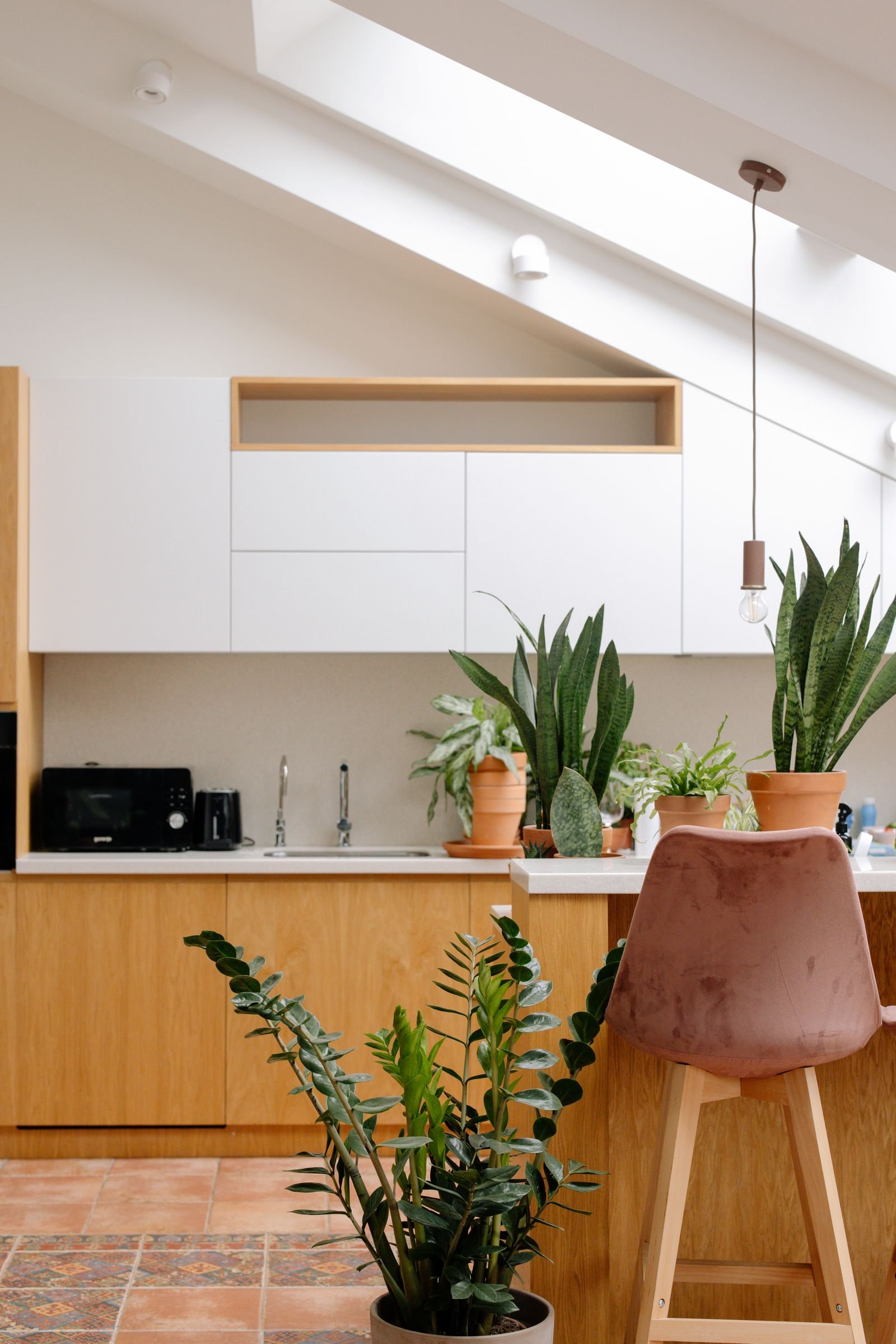
A few healthy plants can make a kitchen feel fresh, calm and alive. The key is choosing plants that suit your light, placing them well and keeping up simple care so they stay green without taking over your counters.
This guide covers which plants to pick, how to handle light, creative display ideas, watering, space-saving tricks and common problems. If you want more plant ideas for the rest of the house, see our guide to decorating your home with plants.
Choose the Right Plants
Pick plants that fit your space and the time you can give them. Some need almost no attention, while others want regular care. A good match makes your kitchen look fresh and makes plant care easy.
Low-Maintenance Options
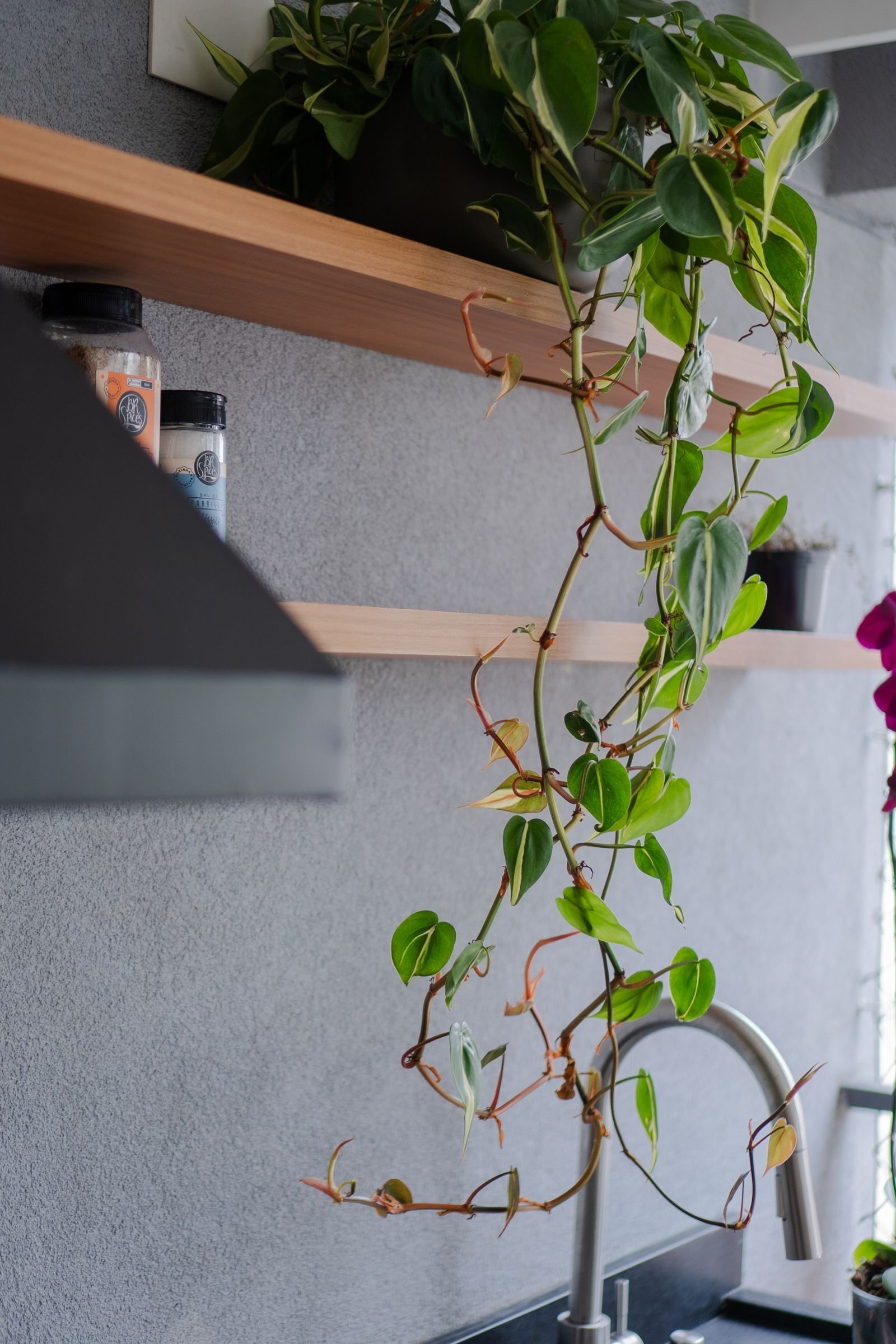
Busy kitchens suit plants that forgive missed waterings. Snake plants and pothos are good choices. They handle low light, and they can go a week or more between waterings once they are settled. They keep the room green without extra work.
Herbs for Cooking
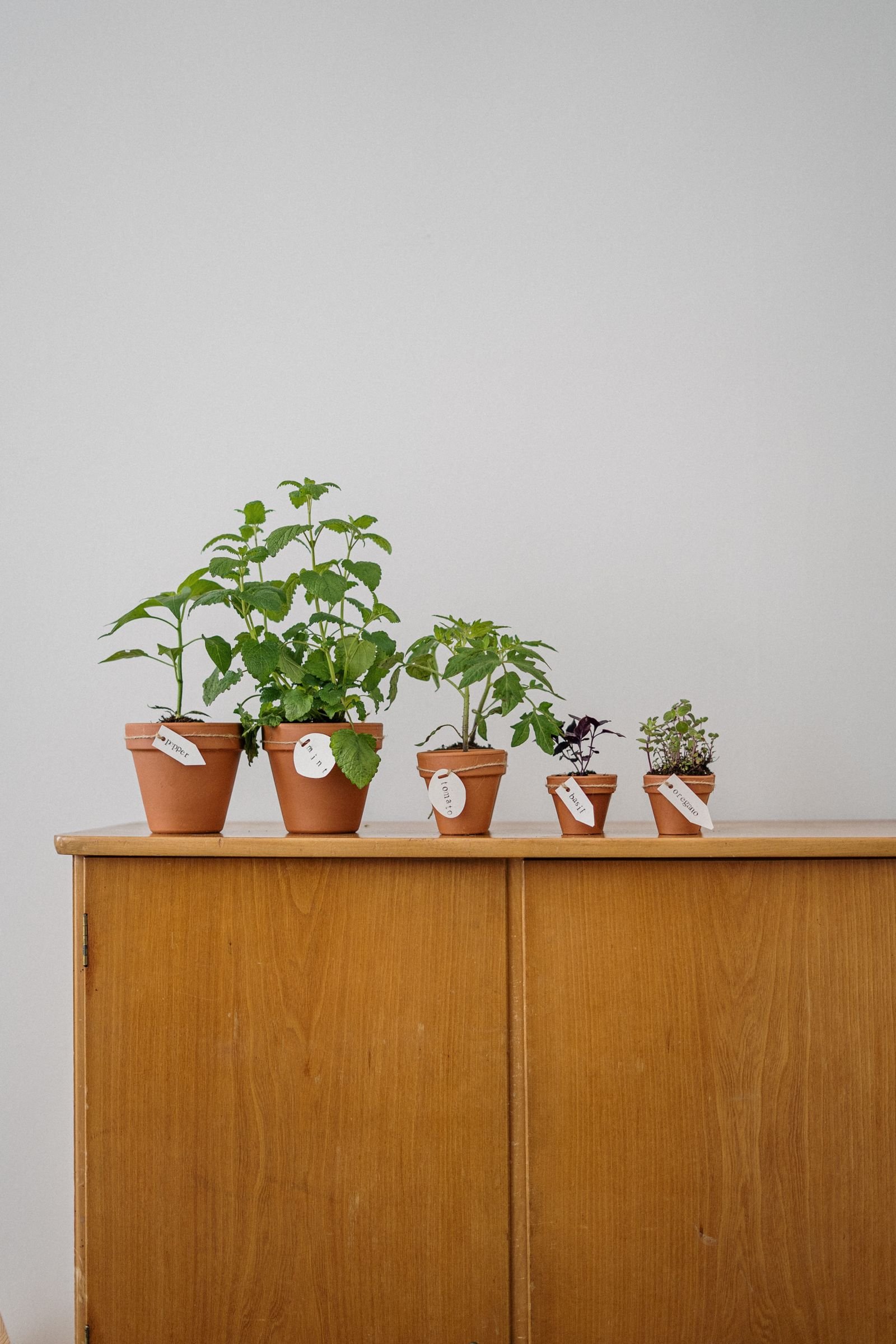
Fresh herbs are both useful and pretty. Basil, mint, parsley, chives and thyme grow well on a sunny windowsill. They need bright light and regular watering. Keep mint in its own pot, because its roots spread quickly and crowd other plants. Snip leaves often, since regular picking keeps herbs full and bushy.
Leafy Plants for Freshness
Spider plants and peace lilies add soft, full foliage to a kitchen. Do not count on plants to clean the air, though. Good ventilation and a range hood do that job far better. Choose these plants for their looks, and note that peace lilies are toxic to cats and dogs, so keep them out of reach of pets.
Optimize Light Conditions
Light decides whether a kitchen plant thrives or struggles. Some plants want bright sun, while others prefer shade, so match each plant to its spot.
Natural Light Sources
A south-facing window gives the most light in the northern hemisphere. East and west windows give moderate light, and north windows give gentle light that suits shade-loving plants. Keep the glass clean so more light gets through.
Artificial Lighting Solutions
If your kitchen is dark, an LED grow light can fill the gap. Choose a full-spectrum bulb for balanced light, and put it on a timer for about 10 to 12 hours a day. Keep the lamp a few inches above leafy plants, and follow the maker’s spacing advice.
Placement Tips for Sunlight
Put sun-loving plants such as herbs close to a window. Rotate pots a quarter turn each week so all sides get light. Keep shade-loving plants a few feet back from direct sun. Pale or yellow leaves usually mean too little light, while brown, crispy patches suggest too much.
Creative Plant Displays
Plants can work as decor as well as greenery. The right display brings color and life while saving space.
Hanging Gardens
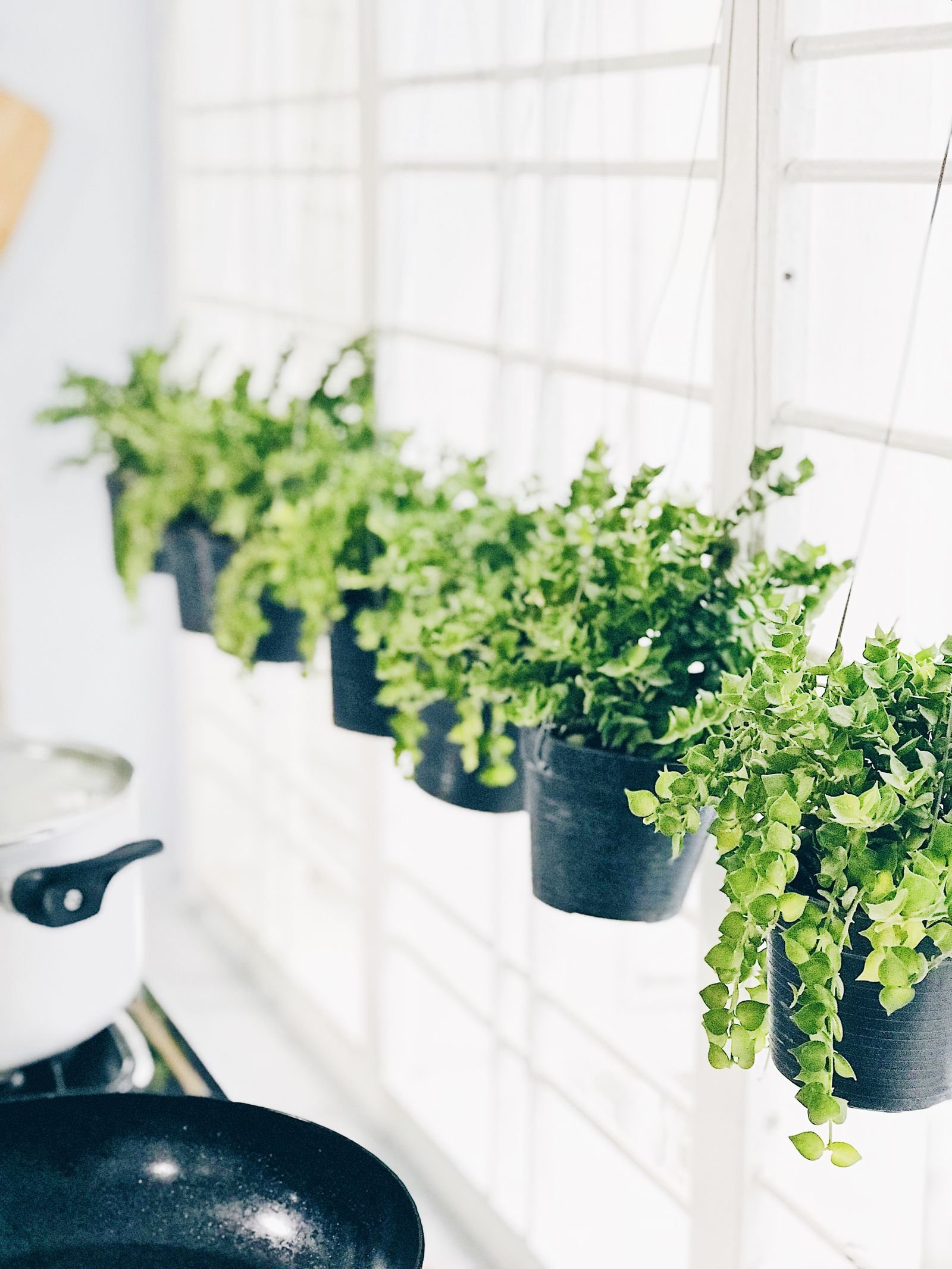
Hanging planters use ceiling or wall space and keep counters clear. Use sturdy hooks fixed into a joist or wall anchor, and choose lightweight pots with a saucer to catch drips. Trailing plants such as pothos or ivy look lush as they spill down. Hang them away from the stove, where heat and grease can harm them.
Window Sills and Shelves
A sunny sill or shelf is ideal for small pots. Herbs such as basil, mint and thyme grow well there, and they stay within reach for cooking. Arrange the pots by height and color for a tidy row.
Vertical Green Walls
A wall of planters or fabric pockets saves floor space and makes a feature of a plain wall. Mix leafy plants with small flowers for variety. Check that the wall is sealed against moisture, and put a waterproof backing behind the planters.
Watering and Care Routines
Steady care matters more than fancy equipment. Check your plants at a regular time, such as when you make the morning coffee.
Proper Watering Techniques
Water when the top inch of soil feels dry. Overwatering is the most common mistake and can cause root rot. Water slowly until a little drains out of the bottom, and then empty the saucer. Make sure every pot has drainage holes. A small watering can with a narrow spout gives better control.
Humidity and Temperature
Most kitchen plants like moderate humidity, and cooking often provides it. Keep them away from the hot stove, the oven vent and cold drafts. A steady room temperature between 65°F and 75°F (18°C to 24°C) suits most common houseplants.
Fertilizing Tips
Feed plants about once a month in spring and summer with a balanced liquid fertilizer, diluted to half strength. Stop feeding in winter when growth slows. Never feed a dry plant; water it first. For herbs you eat, use a fertilizer labeled safe for edible plants.
Maximize Kitchen Space
Kitchens are busy, and counters are precious. A few smart choices let you grow plants without losing workspace.
Compact Plant Containers
Choose small pots that fit on a sill or a narrow shelf. Stacking or hanging pots hold more plants in less space. A long, narrow planter holds several herbs in one row.
Multi-Functional Furniture
A shelf unit with room for pots and storage serves two jobs. A small cart on wheels can hold plants and kitchen tools, and it moves to the window when plants need more light.
Use Unused Areas
Look at corners, the top of cabinets and the space above the sink. Wall-mounted planters and hanging baskets keep counters clear. Use trailing plants on top of cabinets, where they can drape over the edge.
Combine Function and Style
Plants should suit the look of the kitchen. For ideas on a greener, more sustainable kitchen overall, read our guide to a chic eco-friendly kitchen.
Match Pots With Kitchen Decor
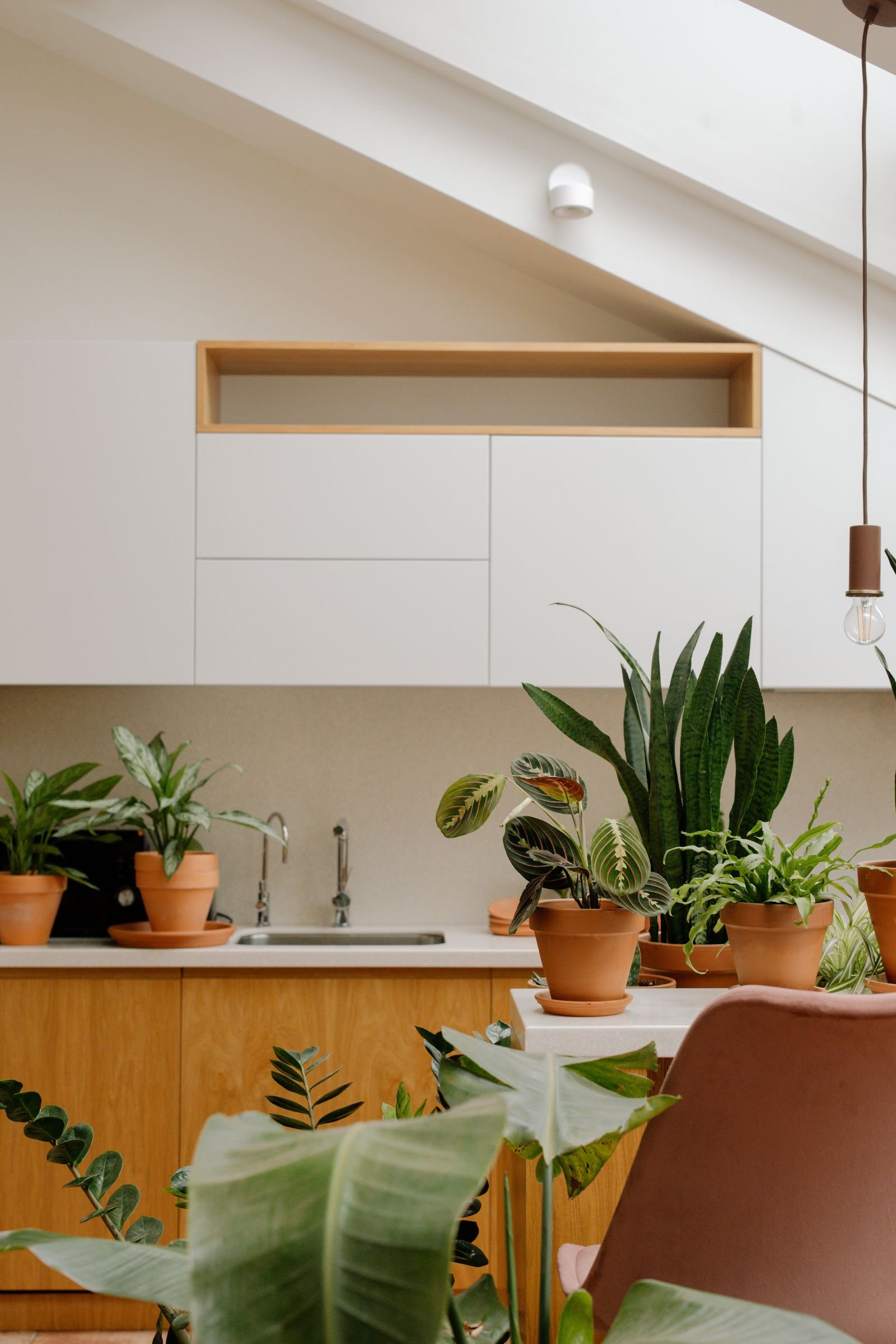
Choose pots in colors that fit your cabinets and counters. Bright pots give a cheerful look, while plain clay feels natural. Group pots with similar colors or shapes, and avoid mixing too many styles.
Add Edible Plants
Edible plants save space and money. Place them near the stove or sink so you can snip a few leaves as you cook. Small pots and hanging planters free the counters.
Rotate Plants With the Seasons
Use fresh basil and flowers in spring and summer, then switch to hardy herbs like rosemary or thyme in fall and winter. Rotating plants keeps the kitchen lively and stops any one plant from getting tired.
Prevent Common Problems
A few simple habits prevent most issues.
Pest Control Strategies
Check leaves and stems often for bugs or eggs. Wipe leaves with a damp cloth, and use neem oil or insecticidal soap if pests appear. Isolate any affected plant until it recovers. Keep plants away from open food to avoid attracting insects.
Avoid Overcrowding
Crowded plants get less air and light. Leave space between pots so air can move, and repot a plant when roots grow out of the drainage holes. Good airflow also helps prevent mold.
Keep Things Clean
Remove dead leaves as soon as you see them. Wipe pots and shelves to stop dust and grease building up, and clean water trays to prevent mold and gnats. If your cabinets are crowded, our tips to organize your kitchen will help you make room for plants.
Frequently Asked Questions
How Do I Choose Plants for My Kitchen?
Choose plants that match the light you have. Herbs need bright light, while snake plants and pothos tolerate low light. All are easy to care for.
What Is the Best Spot for Kitchen Plants?
Near a window is best for natural light, but avoid harsh, direct sun through glass in midsummer. Counters and shelves also work if they get bright, indirect light.
How Often Should I Water Kitchen Plants?
Water when the top inch of soil feels dry. Overwatering harms plants, so check the soil before each watering.
Can Kitchen Plants Improve Indoor Air Quality?
Not by much. Plants add freshness and a natural feel, but ventilation and a range hood are what clear cooking smells and fumes.
How Do I Keep Kitchen Plants Healthy and Pest-Free?
Wipe leaves regularly and avoid standing water in the pot. Use natural treatments such as neem oil if bugs appear.
Conclusion
Kitchen greenery works best when you match each plant to its light, water it only when needed and use space wisely. Start with a few herbs and one easy foliage plant, then add more as your confidence grows. A little green makes the kitchen more welcoming every day.